

Navigating the complex landscape of metal prices scrap requires more than just a passing interest in commodities; it demands a strategic understanding of how global industrial demand intersects with local Australian recycling infrastructure. As a cornerstone of the circular economy, the scrap industry is governed by the London Metal Exchange (LME) and local supply chain dynamics. Whether you are a tradesperson, a demolition contractor, or a private seller, the Scrap Metal Prices you receive are never arbitrary. They are the result of a sophisticated interplay between international manufacturing needs and domestic processing efficiency. By understanding these variables, you can effectively time your sales to capture the best market rate.
The Mechanics of Market Valuation: How Prices are Set
At the highest level, the value of your scrap is tied to the LME, where copper, aluminum, lead, nickel, and zinc are traded in real-time. However, the price you see on a global ticker is not the price you receive at the weighbridge. The Australian market operates on a ‘net-back’ pricing model. This means that the global commodity price is adjusted for logistics, processing costs, labor, and the specific purity of the material.
When you look for Scrap Metal Prices Near Me, you are essentially looking for the local conversion of these global rates. Local yards must account for the cost of transporting heavy materials to ports for export or to domestic smelting facilities. Furthermore, currency fluctuations play a massive role. Because most metals are traded in USD, a strong Australian dollar can sometimes suppress local scrap prices, while a weaker AUD often boosts the value of exports, leading to higher payouts for sellers.
To truly understand the Ultimate Guide to scrap metal prices in Australia, one must recognize that scrap is a commodity like any other. When manufacturing in China or India slows, demand for raw scrap drops, causing a ripple effect that hits local Australian yards within weeks. Conversely, infrastructure booms—such as large-scale rail or construction projects—increase the demand for recycled metal, driving up the price per kg.
Categorizing Scrap: Understanding Metal Grades
The most common mistake sellers make is failing to sort their scrap. A mixed load of ‘dirty’ metal—meaning it contains plastic, wood, or non-metallic attachments—will always attract the lowest possible price. Yards must spend labor hours removing these contaminants, and that cost is deducted from your payout. To get the Best Scrap Metal Prices Near Me, you must present clean, sorted material.
Copper is the gold standard of the scrap world. It is categorized into grades such as ‘Bright and Shiny’ (Number 1 copper), which is bare, unalloyed, and uncoated wire. This fetches the highest price per kg because it requires minimal processing for the refinery. ‘Number 2’ copper includes wire with slight oxidation or minor insulation, while ‘Copper Pipe’ (plumbing scrap) is graded based on the presence of solder or paint. Brass, which is an alloy of copper and zinc, is graded based on the presence of iron or other contaminants.
Aluminum is equally nuanced. ‘Extrusion’ (window frames) is highly valued, but only if the thermal breaks, rubber seals, and screws are removed. ‘Cast’ aluminum (engine blocks) is traded at a different rate because it contains higher levels of silicon. Steel is categorized as ‘Heavy Melting Steel’ (HMS) or ‘Light Gauge’ (white goods). Understanding these distinctions is the difference between receiving a bulk rate and a premium rate.
Factors Affecting Cost and Market Volatility
Why do metal prices scrap change from one week to the next? The answer lies in inventory levels. If local yards are sitting on massive stockpiles of steel, they will lower their buy price to discourage more intake. If a major smelter has an urgent order to fill, they will increase their buying price to incentivize scrap flow. This is why it is essential to monitor professional scrap trading resources to stay updated on current trends.
Environmental regulations also play a role. As Australia moves toward more stringent carbon reporting, the energy cost of smelting ‘virgin’ ore versus recycling scrap is becoming a major economic lever. Recycled aluminum, for example, requires 95% less energy to produce than primary aluminum. As companies seek to reduce their Scope 3 emissions, they are increasingly paying a premium for ‘green’ recycled scrap, which is driving up prices for high-quality, sorted aluminum and copper.
Logistics costs are the silent killer of profit margins. If your scrap is located in a remote area, the cost of transport will be deducted from the price per kg. This is why aggregating your scrap—collecting a significant volume before selling—is the most effective way to offset transport costs and negotiate a better deal with the yard manager. Always ask about volume incentives; many yards will provide a better rate for a full truckload compared to a small trailer load.
The Recycling Process: From Yard to Smelter
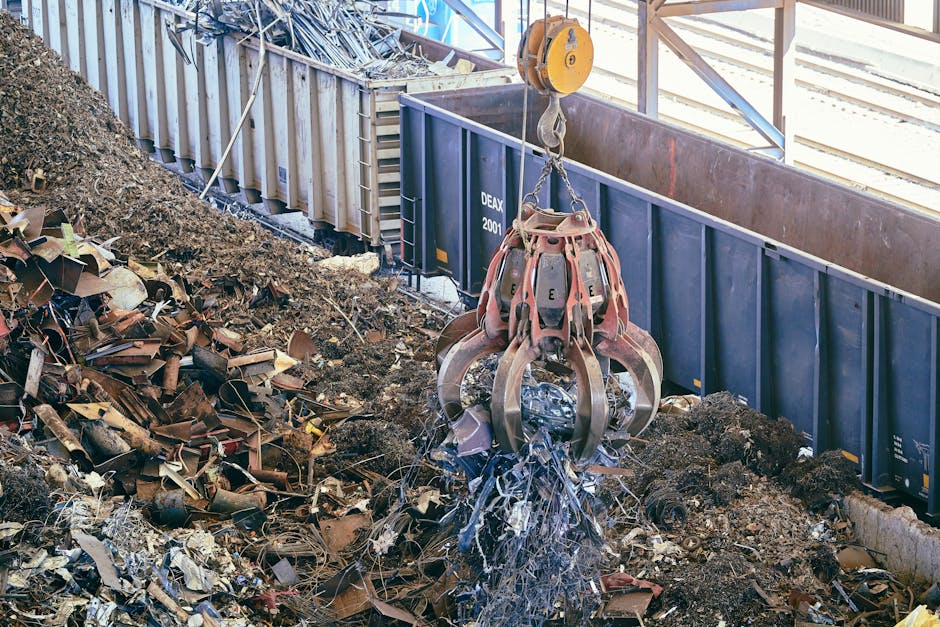
The journey of your scrap begins at the weighbridge. Professional recyclers use calibrated, government-certified scales to ensure accuracy. Once weighed, the material is inspected for grade. This is where the value is locked in. The material is then moved to a processing area where it is sorted, shredded, or baled. Shredding is particularly important for mixed metals; high-powered magnets are used to separate ferrous (iron-based) metals from non-ferrous metals like copper and aluminum.
After sorting, the metal is often baled into high-density cubes. This makes it easier to transport and load into shipping containers. From there, the metal is sent to domestic smelters or exported to global markets. In the smelter, the scrap is melted down at extreme temperatures, impurities are skimmed off, and the molten metal is cast into ingots or billets. These ingots are then sold back to manufacturers to create everything from new car parts to home appliances.
This entire process is a closed-loop system. Because metals like copper and aluminum do not lose their chemical properties during the recycling process, they can be recycled infinitely. This is why the market for scrap is so robust—it is a perpetual resource that reduces the need for destructive mining and lowers the overall carbon footprint of the manufacturing sector. By recycling, you are not just making money; you are participating in a vital environmental infrastructure project.
Maximizing Your Returns: Practical Tips for Sellers
To consistently secure the highest market rate, you need to treat your scrap as a product, not waste. First, invest in a magnet. It is the simplest tool for distinguishing between ferrous (magnetic) and non-ferrous (non-magnetic) metals. Non-ferrous metals like copper, brass, and aluminum are almost always more valuable. If your magnet sticks to it, it is steel or iron, which should be kept separate from the high-value non-ferrous pile.
Second, keep your scrap dry and clean. Moisture adds weight, but it also causes oxidation, which lowers the grade of the metal. If you are storing copper for a long period, keep it under cover. Third, strip your wires. While it takes time, the price difference between ‘insulated copper wire’ and ‘bare bright copper’ is significant. If you have a large volume, consider investing in a wire stripping machine; the return on investment is often realized within a few months of regular trading.
Finally, build a relationship with your local yard. If you are a regular supplier of clean, well-sorted material, you become a preferred client. Yard managers prefer dealing with professional sellers who understand grading, as it reduces their own processing time. Don’t be afraid to ask for a ‘spot price’ if you have a significant volume to move. Many yards will offer a slightly better rate for a guaranteed supply of high-grade material. Always check the official scrap trading portal to compare regional prices before you head out to the yard.
Environmental Benefits and Future Outlook
The environmental case for scrap metal recycling is undeniable. Mining for raw ore is one of the most energy-intensive and environmentally damaging industries on the planet. It involves massive land clearing, habitat destruction, and the consumption of vast quantities of water and electricity. By contrast, recycling metal uses a fraction of that energy and produces significantly fewer greenhouse gas emissions.
As Australia continues to transition toward a greener economy, the demand for recycled metals will only grow. The rise of electric vehicles (EVs) is a prime example. EVs require significantly more copper for their wiring and motors than internal combustion engine vehicles. This surge in demand is already putting pressure on global supply chains, ensuring that the value of copper scrap remains high for the foreseeable future.
Furthermore, the shift toward a circular economy means that manufacturers are increasingly designing products for ‘disassembly’ rather than disposal. This will make it easier for recyclers to recover valuable metals, further increasing the efficiency of the recycling process. For the average Australian, this means that scrap metal will remain a valuable asset class. By staying informed, sorting your materials, and understanding the market, you can ensure that you are getting the best possible return on your scrap while contributing to a more sustainable future.
In conclusion, the market for metal prices scrap is a dynamic, global, and highly professional industry. Whether you are dealing with a small bucket of copper wire or several tonnes of heavy steel, the principles remain the same: quality, sorting, and market timing are the keys to success. By leveraging the insights in this guide and utilizing professional resources, you can navigate the complexities of the scrap market with confidence and maximize the financial and environmental value of your materials.
Frequently Asked Questions
Why do scrap metal prices change so frequently?
Prices are primarily driven by global commodity exchanges like the London Metal Exchange, which fluctuate based on international supply and demand. Local factors such as currency exchange rates, transport costs, and domestic inventory levels also cause daily or weekly adjustments.
What is the most valuable scrap metal to collect?
Copper is consistently the most valuable common scrap metal due to its high demand in electronics, construction, and green energy technologies. Clean, unalloyed ‘bright and shiny’ copper wire fetches the highest price per kg.
How can I get better scrap metal prices for my load?
The best way to increase your payout is to thoroughly sort your metals by type and remove all non-metallic contaminants like plastic, wood, or rubber. Presenting clean, high-grade material saves the recycler time and labor, which they often reward with better pricing.
Does it matter if my scrap metal is dirty or oxidized?
Yes, it significantly impacts the price. Oxidation and contaminants like insulation or paint require extra processing steps to remove, which reduces the final value of the scrap; always aim to keep your metal clean and dry to ensure you receive the top market rate.