
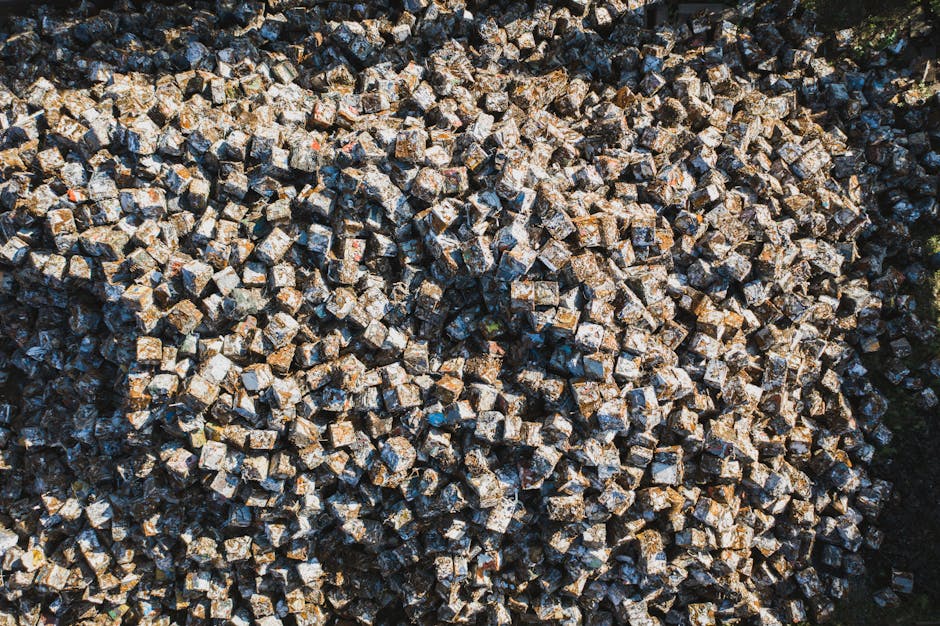

Understanding the lifecycle and economic potential of carbide scrap is essential for any Australian business operating within the manufacturing, mining, or automotive sectors. Unlike common ferrous metals, tungsten carbide is a critical, finite resource that demands specialized handling to ensure maximum recovery of its high-value components. Whether you are managing industrial waste from precision engineering or clearing out specialized auto parts from vehicle recycling operations, the proper classification and processing of these materials can significantly impact your bottom line. When you decide to Sell Scrap, knowing the specific grade of your material is the first step in ensuring fair market valuation. The Australian market for this material is robust, supported by specialized facilities like Gmr Scrap, which bridge the gap between industrial waste generators and global recycling supply chains. By treating your Scrap not as waste, but as a secondary raw material, you contribute to a circular economy that reduces the environmental footprint of mining virgin tungsten.
Understanding Carbide Scrap Grades and Composition
Tungsten carbide is not a uniform material; it is a composite, typically consisting of tungsten carbide particles bonded together by a metallic binder, most commonly cobalt. The grade of your material is determined by the ratio of these components and the presence of any impurities. In the Australian manufacturing landscape, identifying these grades correctly is the difference between a standard scrap price and a premium return. High-cobalt grades are often found in mining bits and heavy-duty drilling equipment, while low-cobalt, high-purity grades are standard in precision cutting inserts and end mills. Contamination is the primary enemy of value. Steel shanks, brazing materials, and ceramic coatings can downgrade a batch of high-purity inserts to the price of mixed scrap. When sorting, look for magnetic properties—pure tungsten carbide is generally non-magnetic, while the inclusion of steel shanks or iron-based binders will alter this characteristic. For those looking to Maximise Your Profit: Selling Scrap Carbide in Australia, pre-sorting by grade is the most effective strategy. Always keep your carbide separate from other scrap metals, as cross-contamination can render an entire batch unrecyclable for high-end applications. If you are working with car wreckers, ensure that any specialized tungsten components found in high-performance engine parts are isolated from the general steel scrap pile.
The Technical Process of Recycling Carbide
The recycling of carbide scrap is a sophisticated metallurgical process designed to return the material to its elemental form or to a powder state suitable for re-sintering. The two primary methods used globally and within the Australian recycling network are the Zinc Process and the Chemical Process. The Zinc Process involves submerging the carbide in molten zinc, which reacts with the cobalt binder, causing the material to expand and crumble into a porous mass. This mass is then crushed and milled back into high-quality tungsten carbide powder. This method is highly efficient for clean, high-grade scrap. The Chemical Process, conversely, involves dissolving the scrap in acids or molten salts to separate the tungsten and cobalt completely. This is necessary when the scrap is heavily contaminated or consists of complex alloys that cannot be processed through physical methods alone. The resulting powders are then refined to match the specifications of virgin material. Because the energy required to recycle these materials is significantly lower than that required to mine, process, and refine new tungsten ore, the environmental benefits are massive. By choosing to recycle, you are actively reducing the demand for new mining operations in sensitive ecosystems. You can learn more about these industrial recovery standards at Scrap Trade Australia or explore local logistics at Scrap Trade for specialized collection services.
Environmental and Economic Impacts
The economic argument for recycling carbide is as compelling as the environmental one. Tungsten is classified as a critical raw material by many nations due to its strategic importance in defense, aerospace, and renewable energy technologies. By keeping this material in the supply chain, Australian companies protect themselves against the volatility of global commodity markets. When you recycle, you are essentially participating in a closed-loop system that preserves the value of the material indefinitely. Environmentally, the impact is profound. Mining for tungsten involves large-scale earth displacement, chemical leaching, and high energy consumption. Every kilogram of recycled carbide prevents the need for roughly 100 kilograms of raw ore extraction. Furthermore, the reduction in carbon emissions associated with the refinement process is a key metric for companies aiming to meet ESG (Environmental, Social, and Governance) targets. In the context of vehicle recycling, incorporating carbide recovery into your workflow adds a layer of sustainability that is increasingly demanded by regulators and end-consumers alike. Whether you are dealing with small-scale precision tooling or large-scale mining equipment, the environmental dividend of responsible recycling is substantial.
Best Practices for Collection and Storage
To ensure you receive the best possible price, your collection strategy must be rigorous. Carbide is dense and fragile; if stored improperly, it can chip or break, leading to loss of material or contamination. Use dedicated, clearly labeled containers for different grades. Never mix carbide with general steel scrap, as the price difference is significant. If you are collecting from auto parts or machinery maintenance, implement a ‘point-of-use’ collection system. Place bins directly at the workstations where the tools are being replaced. This minimizes the risk of the material being swept into general waste bins. Train your staff to recognize the difference between carbide and high-speed steel (HSS). HSS is often mistaken for carbide, but it has a much lower scrap value. A simple spark test or a file test can often distinguish between the two; carbide is extremely hard and will not be marked by a standard metal file, whereas HSS will show a groove. Keeping your scrap dry and free of oils and coolants also improves the final valuation, as processors have to account for the weight of these contaminants when weighing your material. By optimizing your internal collection processes, you transform a disposal headache into a reliable revenue stream.
Navigating the Australian Scrap Market
The Australian scrap market is highly competitive, and prices fluctuate based on global tungsten demand and currency exchange rates. To navigate this, establish a relationship with a reputable buyer who provides transparency in their grading process. Ask for a breakdown of your material and ensure that you understand the deductions applied for contamination. Be wary of buyers who offer a flat rate for all carbide; this is almost always a sign that you are being underpaid for your high-grade material. Use online resources to track market trends and understand the ‘LME’ (London Metal Exchange) or similar benchmarks for tungsten. When dealing with large volumes, consider requesting a multi-batch assay to ensure consistency. Establishing a long-term partnership with a processor allows you to negotiate better terms and gain insights into upcoming price shifts. Remember that logistics also play a role in your net profit. If you are generating significant volumes, look for a partner that offers efficient pick-up services or specialized containers to reduce your handling costs. By treating your scrap management as a core business function rather than an afterthought, you can significantly improve your margins.
The Role of Carbide in Modern Engineering
The ubiquity of carbide in modern engineering cannot be overstated. From the drill bits used in Australia’s vast mining sector to the precision cutting tools required for high-end auto parts manufacturing, tungsten carbide is the backbone of industrial productivity. Its ability to maintain hardness at elevated temperatures makes it indispensable. However, this performance comes at a cost, both financially and environmentally. As industries pivot toward more sustainable practices, the demand for recycled carbide is expected to grow. Companies that can demonstrate a circular supply chain, where their used tools are recovered and fed back into the production of new ones, will hold a competitive advantage. This is particularly relevant for car wreckers and automotive recyclers who handle high-performance components that often contain specialized carbide alloys. By reclaiming these materials, you are not just clearing space—you are recovering high-value assets that have a permanent place in the global manufacturing cycle. The future of the industry lies in the seamless integration of recovery into the product lifecycle, ensuring that nothing of value is ever lost to a landfill.
Frequently Asked Questions
What is the most effective way to identify carbide scrap?
The most reliable method is the file test; tungsten carbide is extremely hard and will not be scratched by a steel file, whereas high-speed steel will show a groove. Additionally, pure carbide is generally non-magnetic, while steel-shanked tools will show magnetic attraction.
Why does contamination lower the value of my scrap?
Contamination such as steel shanks, brazing material, or ceramic coatings requires additional energy and chemical processing to remove. These impurities reduce the purity of the final tungsten powder, forcing recyclers to charge for the extra labor and processing steps required to clean the material.
Does the grade of the carbide matter for recycling?
Yes, different grades contain varying percentages of cobalt and other binders, which are essential for specific industrial applications. High-purity, low-cobalt grades are generally more valuable than heavily alloyed or contaminated mining-grade scrap.
How does recycling carbide help the environment?
Recycling carbide significantly reduces the need for virgin tungsten mining, which is an energy-intensive and environmentally disruptive process. By recovering the material, we conserve natural resources and lower carbon emissions associated with the refinement of raw tungsten ore.